Team Building with Solve the Case
An in-person facilitation plan for offsites, classrooms, youth groups, and volunteer teams.
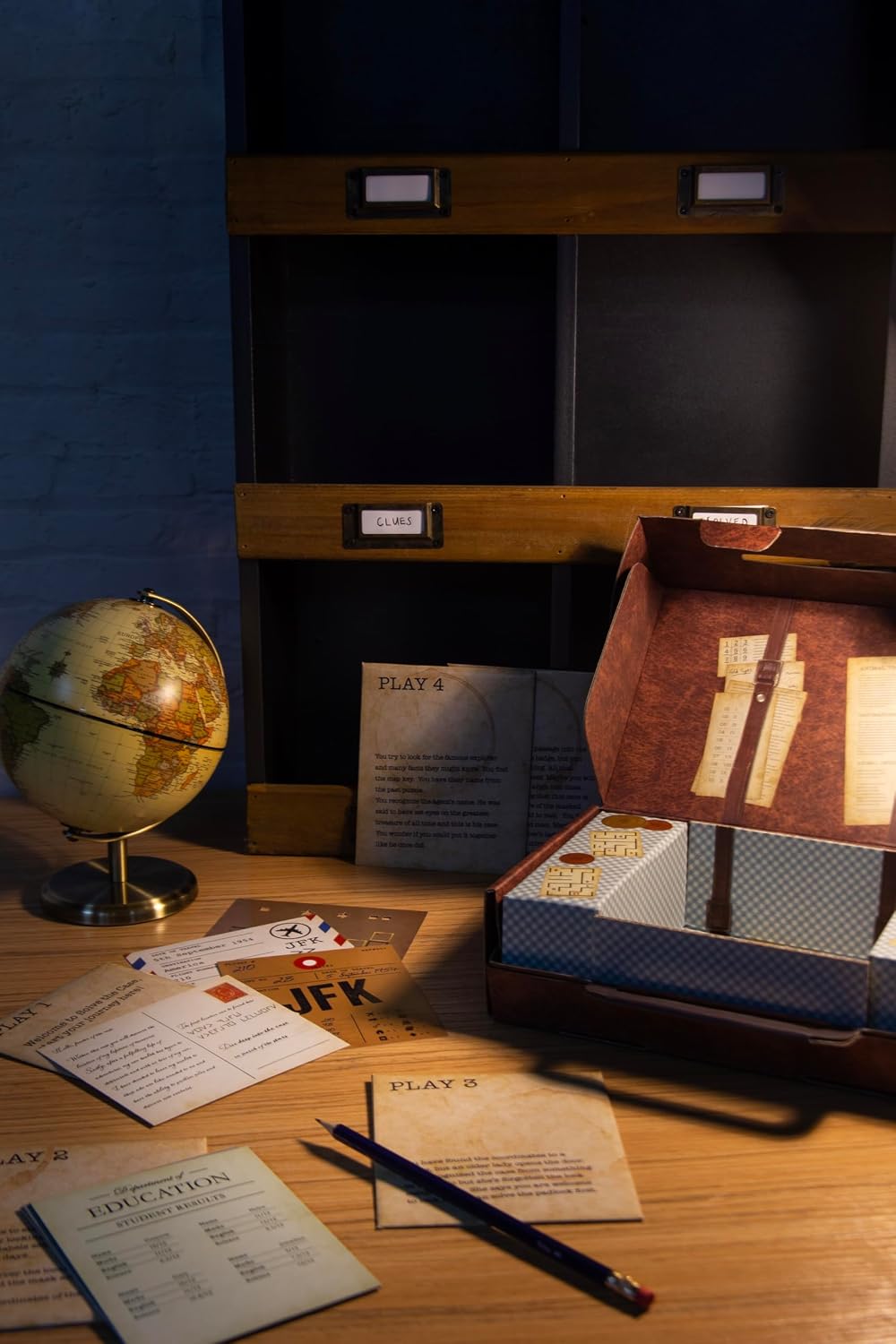
Major retail listings for Solve the Case, including Walmart and Amazon, present Fizz Creations’ portable suitcase as a team-building exercise as well as a family activity. That pitch only holds if you host what the box actually is: a physical 3D escape room, not a video game and not a Roblox session. The printed guidance is ages 12+, 1+ players, about sixty minutes per play, and five plays that must be opened in order. Everyone who needs to solve has to share one case in the same room, looking at the same stickers, cards, and folds. This page is a facilitation plan for office offsites, classroom icebreakers, youth groups, and volunteer teams. Household pacing is covered in Family & Date Night. Headcount and turn-taking live on the Players Hub.
When the suitcase is a good team exercise
Solve the Case works when a small group needs a shared problem with a visible finish line and no slide deck. A conference-room table, a classroom cluster, a scout or youth-group evening, or a volunteer board in one community room can all use it. The lost-luggage story gives people something to discuss besides org charts, rosters, or last quarter’s goals. Named roles give quieter colleagues a job that is not “speak up more.” The sixty-minute cap keeps the block from swallowing an entire retreat.
It is a weak fit when you want a personality score, a winner to mention in a performance review, or a spectacle for thirty people hovering over one piece of cardboard. The case is the bottleneck. Four to six active players is the comfortable band. Extra people can rotate as observers who pass written ideas, but they should not all grab components at once. If the social goal is a couple or a household rather than a facilitated group, use Family & Date Night instead of this agenda.
When not to use it
Do not schedule Solve the Case for a fully remote team, a hybrid all-hands, or a “play along on the video call” hour. There is no online lobby and no second copy hiding in software. One suitcase has to be touched locally. A webcam turns most participants into spectators, and a recording leaks every card to anyone who watches later. Mailing the same case from city to city is also a bad plan: later plays reuse earlier materials, and a traveling box invites someone to open the next envelope early.
If only one office is on site, run the exercise for the people at the table and give remote colleagues a different activity. A second physical case for a second city is a purchase decision, not a feature of the copy you already own. Start from Where to Buy & Links only after you have committed to in-person play. For the rules the group will actually follow, read Getting Started before anyone sits down.
Facilitation agenda
Single play (icebreaker, about 90 minutes)
Use this shape for a staff lunch, an advisory period, or the opening block of a volunteer training day. Play 1 is the gentlest on-ramp. The middle hour is the puzzle; the edges are your job as host.
| Clock | Block | Facilitator focus |
|---|---|---|
| 0–10 | Purpose and pledge | Collaboration, not ranking. Phones away. No searching the puzzle. |
| 10–20 | Table setup | Timer, pens, scrap paper, bright light. Future envelopes out of reach. See the Tools Hub. |
| 20–80 | One play | Visible sixty-minute timer. Roles stay in force. Hints only by the policy below. |
| 80–90 | Debrief | How the group shared information, not who looked clever. |
Open with one sentence of product context so nobody expects an app: the suitcase itself is the board. Do not preview later plays. If the hour ends without a solution, stop on the hint ladder rather than stealing the ending. An unfinished first play can resume at the next meeting if the materials stay undisturbed and unopened envelopes stay sealed.
One-day offsite versus five shorter meetings
Clearing all five plays on a single retreat day is possible, and it goes badly when the invite calls it a light morning slot. Budget five to seven hours including breaks, not five tidy clock hours. Real groups run long when they debate. Put a stretch break after Play 2 and a longer pause before Play 4. Keep food and drinks off scratch areas and folds. Store unopened envelopes in another room if the group is competitive.
Classrooms, youth groups, and volunteer committees usually do better with one play per meeting across five gatherings: five class periods, five club nights, or five short committee openings. Each sitting has a clean stop, and someone who misses a week is not dropped into the middle of a marathon. Between sessions, lock the suitcase where casual visitors cannot flip envelopes. Keep finished plays with the case; later chapters expect those cards. A five-meeting arc also lets you rotate roles so the same person is not suitcase lead every time.
Choose the format before you send the invite. A one-day offsite that dies at hour four teaches the wrong lesson about collaboration. A five-night club that loses the case between meetings teaches a worse one. Never skip ahead to “the exciting play.” Order is part of the product.
Role assignment
Free-for-all grabbing feels energetic for ten minutes and then sidelines everyone who is not the loudest voice. Name roles out loud before the first card is read. Swap them at each new play so status does not freeze in place.
| Role | Job during the play |
|---|---|
| Suitcase lead | Only person who moves panels, overlays, folds, and scratch areas. Narrates every touch. |
| Scribe | Writes codes, dead ends, and “we already tried this” so the group does not loop. |
| Checker | Holds the answer sheet. Confirms a solution only after the group agrees to check. |
Add a card reader if text is dense, and a timekeeper if the facilitator should not also watch the clock. The reader speaks each new card once, then hands it around. The timekeeper calls a midpoint and does not editorialize about whether the group is “behind.”
Workplace and classroom habits that keep the roles fair:
- Do not give suitcase lead to the most senior person by default. Rank at the case becomes rank in the conversation.
- Explain the printed lockout before anyone needs it. A wrong final check sidelines that checker for the current play only, not for the rest of the offsite. Rotate the checker so one mistake is not a public demotion.
- Invite observers to pass one written idea at a time instead of talking over the scribe.
- In a youth group that includes players under the 12+ line, let them spot and suggest while an adult suitcase lead handles fragile pieces.
Setup language, including envelope order, is in Getting Started. Spoiler-light process advice is in Tips and Hints.
Hint policy for workplaces and classrooms
Agree the ladder before Play 1. Post it where everyone can see it, so asking for help is a process step rather than a confession.
- Re-read the active cards aloud and re-check the case.
- Use the hint printed on the back bottom of the current envelope.
- Take a five-minute quiet reset. The scribe reads back only what the group actually knows.
- If the group votes, open Tips and Hints and stay on the non-spoiler guidance.
- Walkthroughs and the sealed answer sheet come last, through the checker alone.
For a short icebreaker whose goal is morale, allow step 2 around the forty-minute mark even if nobody wants to “give up.” For a longer offsite, wait until the table asks. Either way, the facilitator does not whisper the answer to protect a reputation as the clever host. Teachers should not award extra credit for refusing hints, and managers should not treat a fast solve as high performance.
Ban phones, Slack, email, and “I’ll just search one thing.” Results jump straight to finals. Do not paste solution links into the calendar invite or the learning-management assignment. Puzzle success is not a grade, a performance rating, or a condition of volunteering again.
Play 4 patience planning
Community reports and the Difficulty Tier List treat Play 4 as the steep spike, largely because a coin-orientation step feels under-clued even to groups who sailed through earlier envelopes. Do not schedule that play in the last twenty minutes before taxis, the school bell, or the building lockup. Put it after a real break. Warn the room in advance without describing the mechanism, and treat the envelope hint as part of the design rather than a failed culture moment.
If the offsite is already late after Play 3, stop. Save Play 4 and Play 5 for another in-person date. Rushing the hardest chapter to “finish the box” is how a team-building block becomes a blame session. Facilitators who need the resolution later can read the labeled Play 4 walkthrough in private. Do not put that page on a projector, and do not summarize it for a second cohort that has not played yet.
Accessibility and room setup
Bright, even light matters more than themed decorations. Fine print, sticker art, and small icons punish a dim conference room or a classroom with the blinds half drawn. Offer a magnifier, or a phone camera used only as a lens, with spoiler sites blocked. Seat the suitcase where seated participants, including wheelchair users, can see the interior without being asked to stand. One suitcase lead at a time keeps reach manageable and stops two people from folding the same piece in opposite directions.
Read cards aloud for anyone who cannot comfortably see them. Allow the timer to pause for a medical or sensory break if you announced that house rule at the start. Keep snacks off the cardboard. Scratch-off areas and folds are one-way; do not “help” by writing on components. The printed age guidance is 12+. Younger members of a youth or volunteer family event can join as spotters beside an adult, not as the only people managing delicate mechanisms.
Borrow the practical kit—a visible timer, pencils, scrap paper, and a drink-free zone—from the Tools Hub before guests sit down. A cramped huddle room is worse than a plain table in a larger space, because sight lines are the activity.
Spoiler hygiene for HR, teachers, and hosts
Human resources, teachers, and volunteer coordinators often feel they should pre-play the case “so nothing goes wrong.” A private preview is useful for timing and for checking that pieces are present. It is poisonous if the same person then sits in the solving circle and steers. If you already know the plays, facilitate process only: roles, clock, hint votes, and room safety. Do not hover, hint with your eyebrows, or play devil’s advocate using knowledge from a walkthrough.
Practical rules for hosts who will see the group again on Monday:
- The answer sheet stays a physical page with the checker, not a photo in a shared drive.
- No pictures of open cards in Teams, Slack, group chats, or the class stream.
- Morning and afternoon cohorts do not brief each other in the hallway.
- Do not assign an official solution video as homework before the session.
- People who want to continue at home can follow Family & Date Night without narrating finals back to colleagues still on an earlier play.
This wiki’s play chapters contain answers. Send coworkers and students to Getting Started and Tips and Hints, not to spoiler headings, until the group has voted for help. If a stakeholder asks where the product came from, Where to Buy & Links is the neutral reference. It is not a substitute for hiding the answer sheet.
What to debrief, and what to skip
The useful outcome is shared attention, clean handoffs, and a practiced way of being stuck together. It is not a psychometric test and not a ranking of who is “the detective.” After the timer, ask three questions and then release the room:
- What did we say out loud that helped, and what did we only think?
- When we stalled, did we use the hint ladder or go silent and search?
- Which role should rotate next time so more people touch the work?
Skip public awards for the fastest solver. Thank the scribe and the suitcase lead if they kept the table kind. If someone asks why a later play felt sharper, the Difficulty Tier List explains the curve without forcing a rematch the same afternoon. If Play 4 is the chapter they mean, leave the mechanism undescribed and point facilitators privately to Play 4 only after that group is done.
A good Solve the Case session ends with the case closed, the next envelope still sealed, and people able to describe how they collaborated. That result matters more than clearing all five plays before the bus. Remote teams still need a different exercise: this one cannot be shared except by people sitting at the same suitcase.
Frequently Asked Questions
Quick answers for detectives stuck on the case.
Do retailers pitch Solve the Case for team building?
Yes. Major retail copy, including Walmart and Amazon listings, describes the Fizz Creations suitcase as suitable for team-building exercises. It still only works as local shared play: ages 12+, one physical case, about sixty minutes per play, five sequential plays.
Can a remote or hybrid team play Solve the Case on a video call?
No. There is no online lobby. One suitcase has to be handled in the room. Webcams turn most people into spectators, and shipping a single case between cities leaks envelopes and breaks later plays that reuse earlier materials.
How should a workplace or classroom handle hints?
Post a ladder before you start: reread the cards, use the hint on the back bottom of the envelope, then vote before any walkthrough or answer-sheet check. One checker confirms solutions. Do not grade people, or review them, on whether they needed a hint.
Should an offsite finish all five plays in one day?
Only if you budget five to seven hours and protect extra time around Play 4, the steepest chapter for many groups. Classrooms, youth groups, and volunteer teams usually do better with one play per meeting across five sessions and a locked case between dates.
What if the facilitator already knows the answers?
Run roles, time, and the hint policy, but do not solve with the group or drop hints from memory. Keep the answer sheet with a designated checker, and do not put walkthrough links in the calendar invite or class assignment.